WiFire is an enterprise-level WiFi software solution developed by Ctrlroom. The product is primarily used as a means to capture, process and store large amounts of user data, which is provided by users when they sign up to use publicly available WiFi networks at locations where the WiFire product is used. Ctrlroom’s clients are then able to use this stored data in ways that they deem to be meaningful. Use, in this sense, can be either internal, where the data is processed for purposes of business intelligence, or it can be external, where the data is used as a tool to engage with these users again by way of marketing initiatives.
One of the biggest faults with Ctrlroom’s WiFire product is that it was tailored to enterprise-level users. We found that these users often don’t have the requisite technical skills internally to understand or make meaningful use of the data that Ctrlroom are providing them with. This, coupled with the size of the networks that the product is used on, results in much of Ctrlroom’s available time being spent dealing with existing clients, instead of procuring and onboarding new clients. An adjacent concern is that the cost-to-income ratio of supporting new clients with Ctrlroom’s current, enterprise-focused setup is not sustainable.
Problem Statement: WiFire cannot procure new users because they are too busy dealing with existing users. This hurts prospective growth because internal resources cannot be allocated to new business.
My assessment of the problem statement was that it sounded as though an entirely different business structure would be required to solve it. But that isn’t the case, and I sought to solve this problem with as little imposition on the current business or available resources as possible. The high-level idea that I had was to change the market that Ctrlroom targets, and to develop a new offering which is better suited to that market.
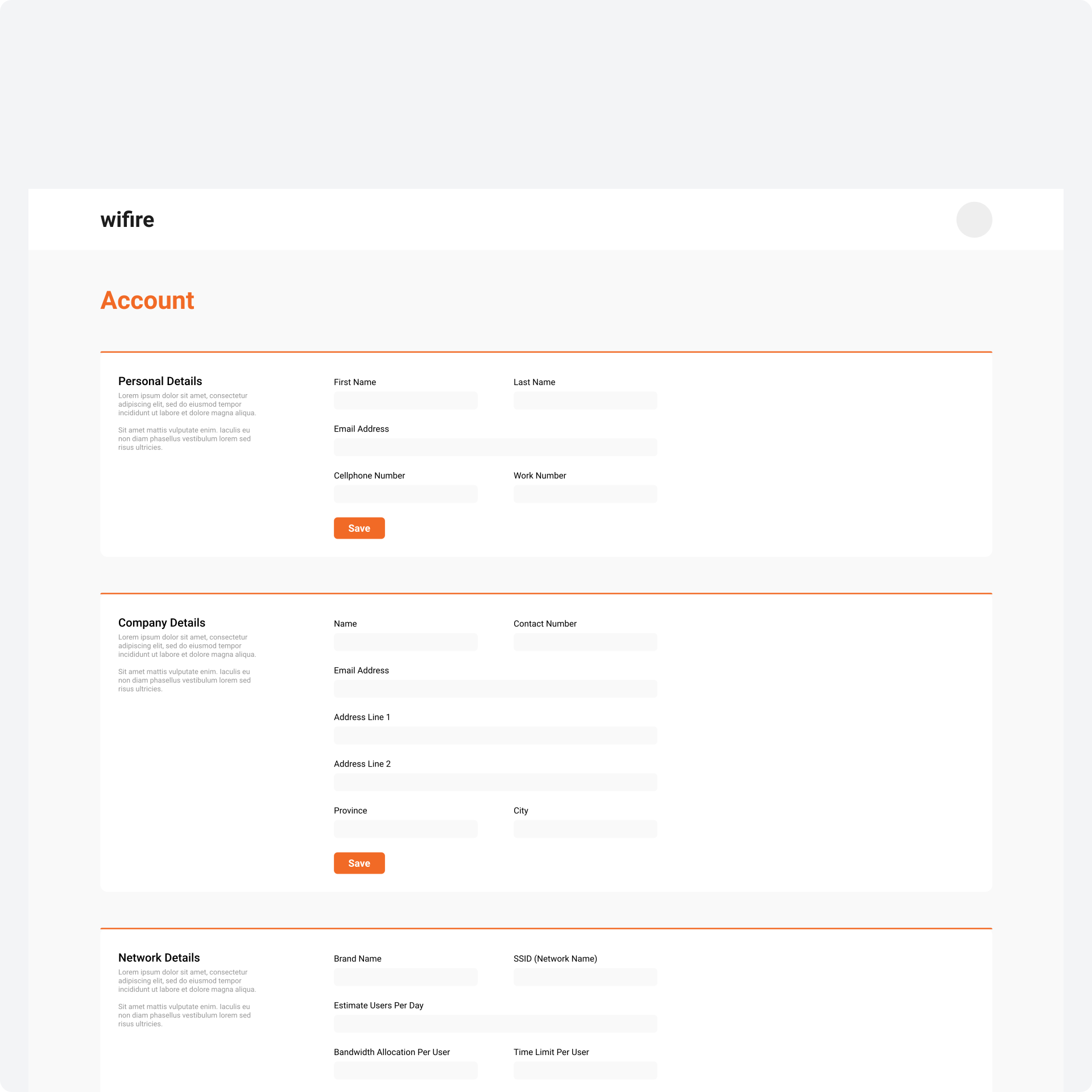
I began by stripping back the core of what the business is. Ctrlroom’s clients would now receive a small, pre-configured Mikrotik device which they would plug into their router. Ctrlroom would then be able to gain remote access into these devices to ensure that they were working as expected. The Mikrotik was the core of the experience for Ctrlroom’s clients. Without the device, they would not be able to make use of the WiFire product. The Mikrotik part of the solution is easy, and ports fairly seamlessly to my intended solution for smaller businesses. Secondary to the Mikrotik device is the accompanying client portal which very few of Ctrlroom’s current clients were using. This portal provided clients with analytics and other user-related data. I understood that this portal would need to be improved, but recognised that it wasn’t an overly-ambitious task to get a first version established from which we could iterate.
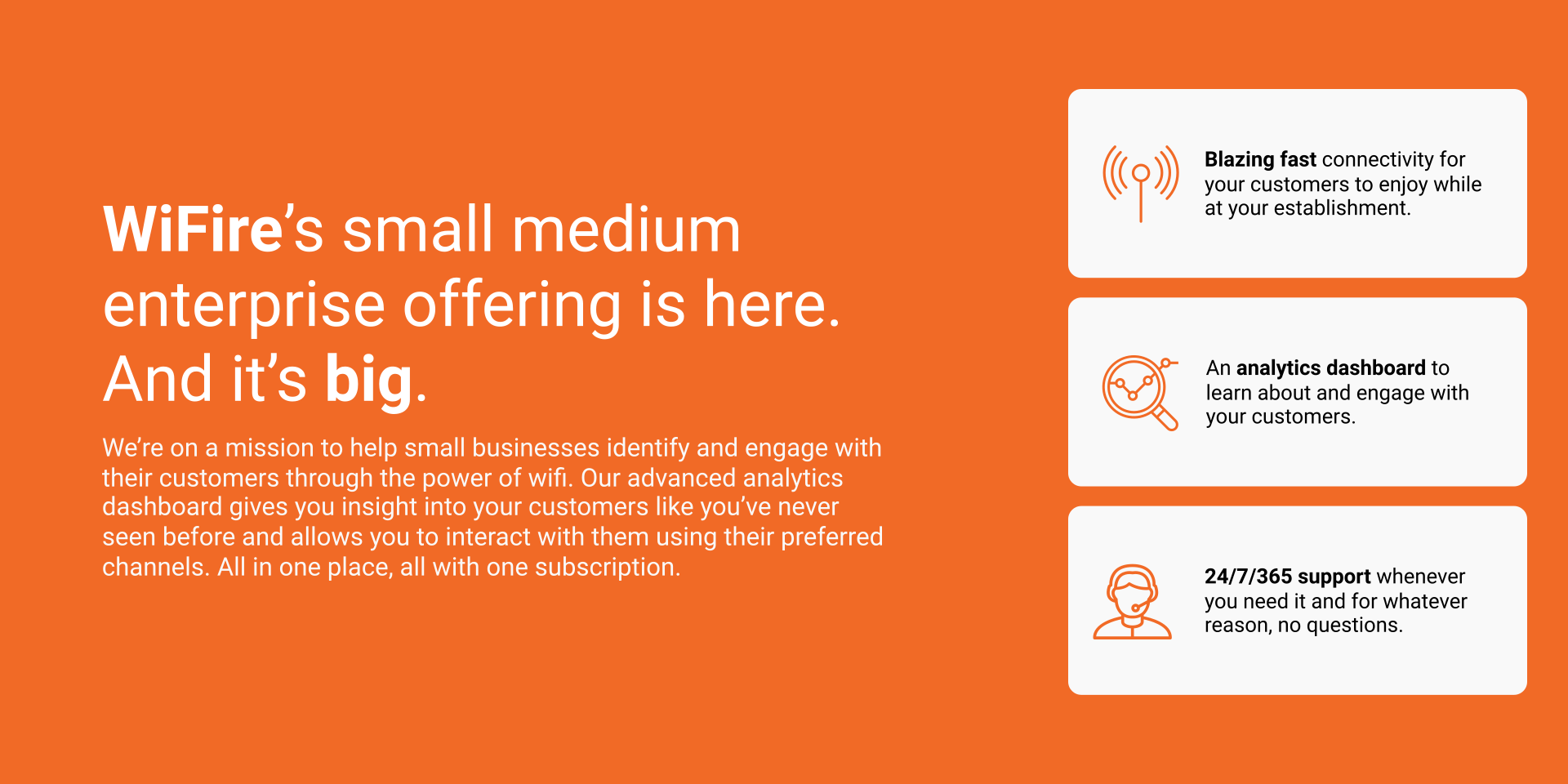
With a good understanding of the current solution, and some clear indications of how it could be improved to be more appropriate for smaller businesses, I sought to design an end-to-end idea of what this new, small-medium-enterprise focused solution might look like. There were three core components to this new solution.
Mikrotik: The backbone of the WiFire product. As previously mentioned, this device is what allows Ctrlroom to gather all of the data that they feed back to their clients.
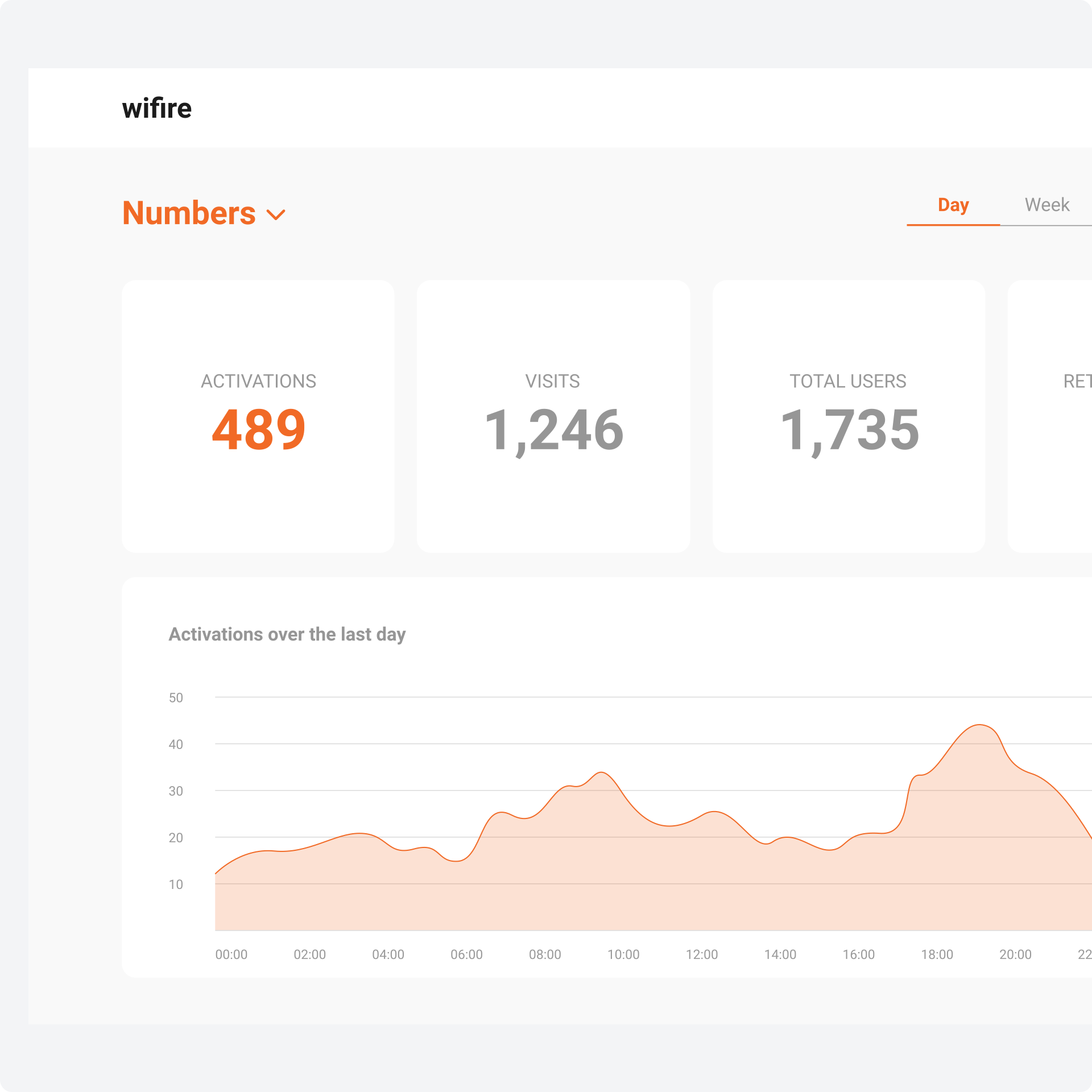
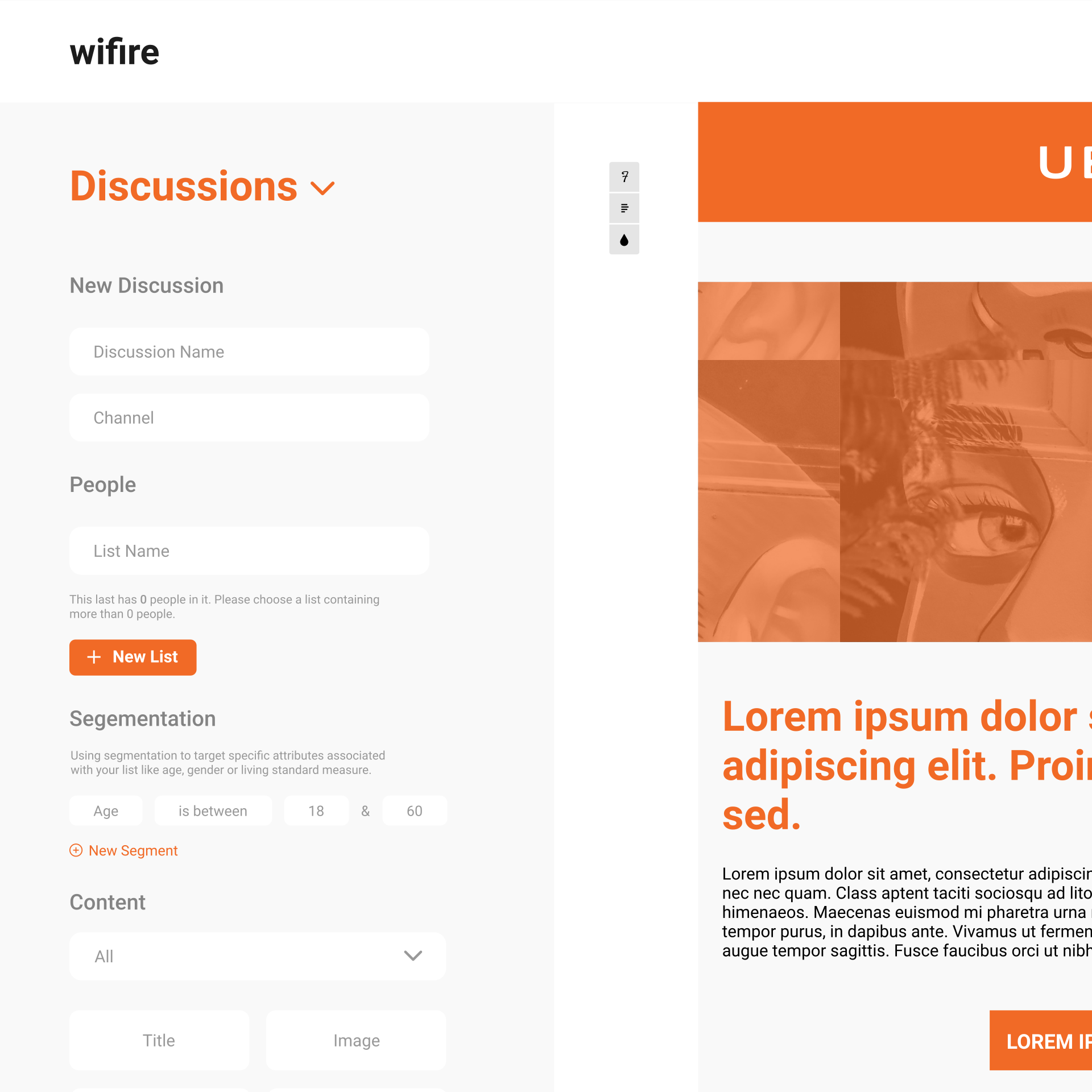
Dashboard: A comprehensive dashboard which communicates all of the information that a client requires. The dashboard, as I envisioned it, would compromise three things: People, Numbers and Discussions. 'People' is a breakdown of all users in the form of a client relationship management view, 'Numbers' is an analytical overview of the network and 'Discussions' is a means to engage with users by way of marketing (And also an additional revenue stream for the business)
Software as a Service: Finally, we would move away from the archaic invoice-and-receive-payment model of doing business. My revised solution would be a software-as-a-service solution. Users would sign up on the website and their payments would be deducted automatically until they cancelled. There would be no contracts and no long term commitments.
In addition to conceptualising what I believed the solution might look like, I also spoke to some users who I believed fit within the definition of clients that we were looking for. I was interested in understanding what they wanted and how they stood to benefit through the use of a system like ours. Through these discussions, it became fairly clear that a lot of our potential users wanted to be very hands-off on a technical level. So the plug-and-play nature of the Ctrlroom product was well suited in this market as well.
Ultimately, this became more and more of a service design project. While I had initially sought to refine the way that we provided users with data and the way that they worked with that data, it became clear that doing this wouldn’t be enough for our existing enterprise clients. Instead, I chose to shift my focus and work a bit more on the design of an entire service and the strategy behind it. A holistic representation of the service that I intended providing is as follows:
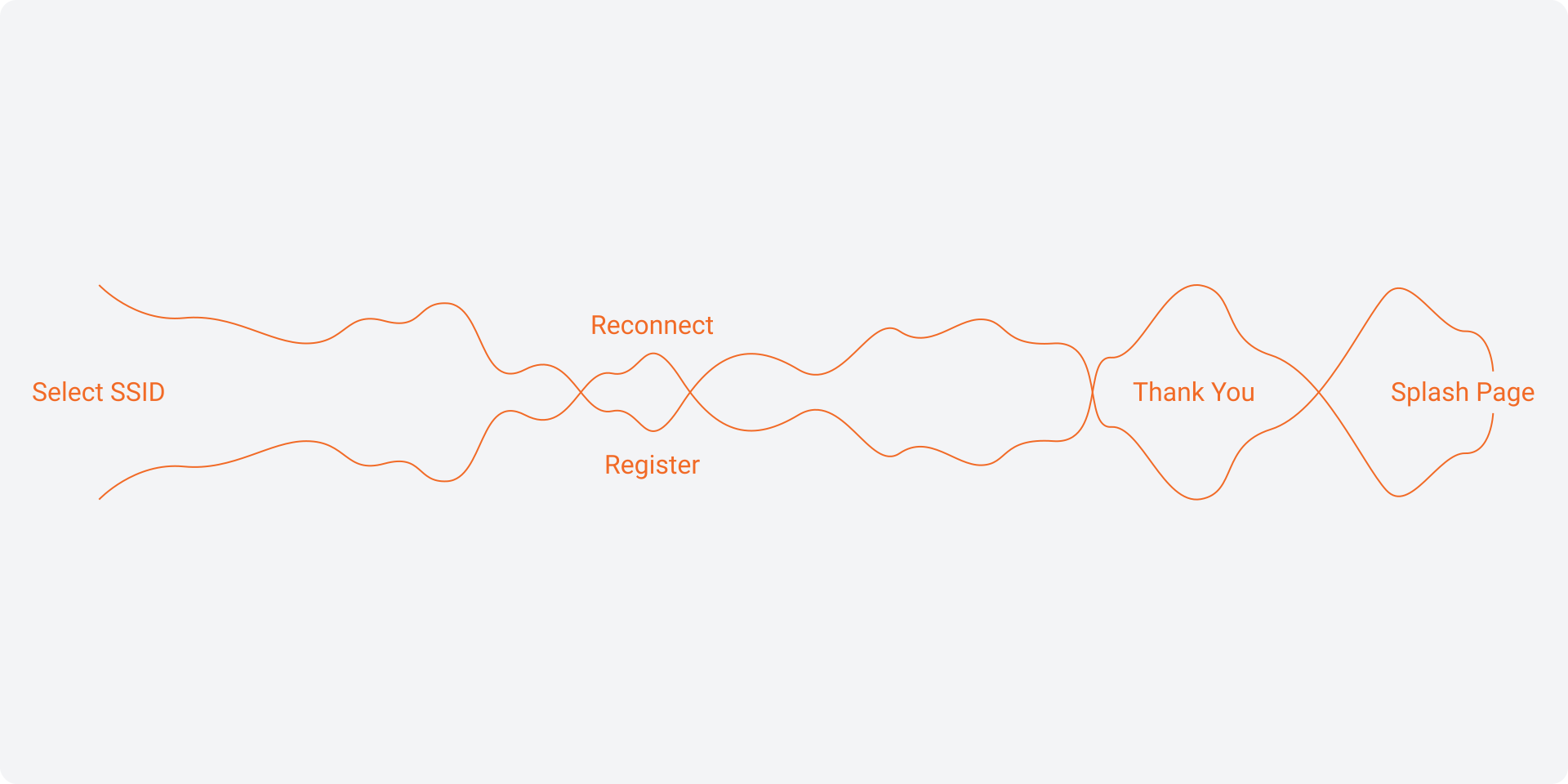
The biggest benefit to the way that I had designed things is that it removed Ctrlroom from the equation. The small businesses making use of the newly refined WiFire product would be able to do everything themselves and, importantly, would have the expectation that they had to. They would design their own splash page, set up their own marketing campaigns, export their own user lists. This would alleviate the workload on the Ctrlroom team, and allow them to become more product instead of operationally focused.
While I’m sad to say that I left Ctrlroom before this project could come to fruition, it was something that I was hugely passionate about and really wanted to see get-going. I think that Ctrlroom has an exceedingly interesting business which does an excellent job of blending the physical and digital worlds. I am still confident that there is a place in the market for the product that I designed.
This project was a time for me to learn about and balance the business and product sides of product design. I think it can be very difficult to silo the two as though they are not intrinsically linked. I was also given the opportunity to flex my creative muscles outside of the confines of a current product, which was something new and exciting for me: Experimenting, figuring out what I thought worked, and speaking to users to get their feedback on my assumptions. Ultimately, this is a project that I’m hugely proud to have worked on.